

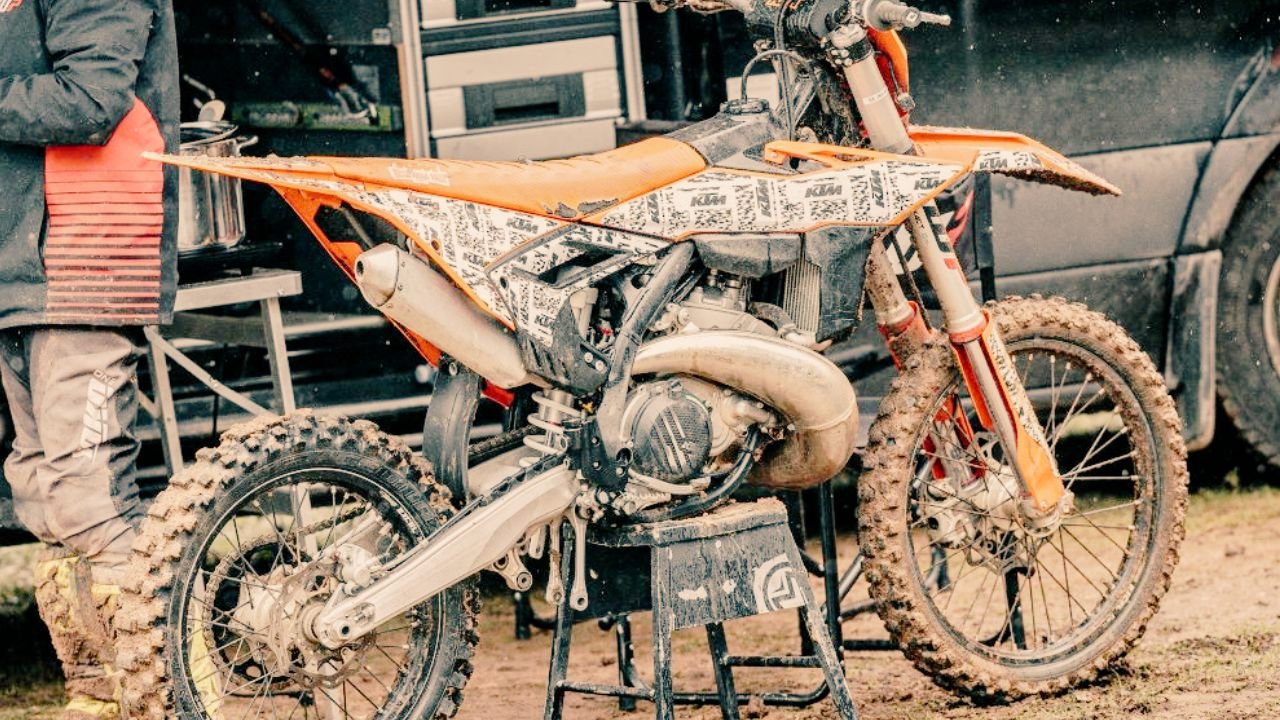
If you searched “KTM going out of business,” you’ve probably seen alarming headlines — words like “collapse,” “bankrupt,” and “billions in debt.” Those headlines aren’t completely wrong, but they leave out a lot of important context.
Here’s what actually happened, what KTM did about it, and what it means if you own or plan to buy a KTM motorcycle.
KTM Is Not Closed — But It Did File for Insolvency
On November 29, 2024, KTM’s parent company, Pierer Mobility AG, filed for self-administration under Austrian insolvency law. That sounds serious — and it is. But it does not mean KTM shut down.
Self-administration works similarly to Chapter 11 bankruptcy in the United States. The company stays open and keeps operating, but it gets legal protection while it reorganizes its debts and works out a plan with creditors. It is a tool for survival, not a death sentence.
KTM did not close its factories permanently. It did not cancel all products. It did not announce it was shutting down. The filing was specifically designed to stop the company from collapsing — not to wind it down.
That distinction matters a lot for anyone trying to figure out what this actually means for the KTM brand.
How KTM Went From Growth to Billions in Debt
To understand the crisis, you need to understand how fast things moved in the wrong direction.
Debt grew at an alarming rate
KTM’s debt grew from around €300 million to somewhere between €1.4 billion and €2.9 billion in roughly two years. Different sources cite different figures, but every one of them points in the same direction — up, fast, and unsustainable.
They built more motorcycles than anyone was buying
KTM produced far more bikes than the market could absorb. Warehouses filled with unsold orange motorcycles. That locked up cash, forced discounts, and made the debt problem much worse. When a manufacturer can’t move inventory, cash flow dries up quickly.
Aggressive expansion added complexity and cost
KTM wasn’t just making KTM bikes. The company held stakes in Husqvarna, GasGas, and MV Agusta. Each acquisition added debt and operational complexity at a time when the core business was already under pressure.
Sales dropped sharply in 2024
In the first half of 2024, KTM’s sales and revenue fell roughly 27% compared to the same period the year before. Years of growth reversed quickly. The company’s share price reflected the damage — dropping from around €89 per share to below €8.
When you put all of that together — overproduction, debt, acquisitions, and falling sales — the insolvency filing starts to make more sense.
What KTM Did to Stop the Bleeding
Between late 2024 and mid-2025, KTM took a series of concrete steps to stabilize the business. Here’s the timeline.
Step 1: Halt production
After the insolvency filing, KTM paused manufacturing. Some sources reference up to seven months of effectively frozen output. This was painful short-term, but it stopped the company from producing even more bikes it couldn’t sell.
Step 2: Cut the workforce
Layoffs followed. Early reports cited around 300 workers. Later, as deeper restructuring took hold, the total reached approximately 1,800 job losses. That’s a significant reduction and reflects how serious the reorganization was.
Step 3: Exit non-core businesses
KTM made a clear decision to focus only on motorcycles. The bicycle and e-bike business was shut down entirely. The company also announced plans to sell its stake in MV Agusta and other non-core assets to raise cash.
Step 4: Reach a deal with creditors
In February 2025, creditors approved a restructuring plan. They agreed to accept roughly 30% of their claims — approximately €525 million — and write off the rest. That kind of “haircut” is significant, but it’s what made the balance sheet viable again without liquidating the company.
Step 5: Secure a bridge loan and restart production
In March 2025, KTM secured a €50 million bridge loan. That funding helped restart production on a smaller, more realistic scale. By mid-2025, KTM had reportedly cleared around 40,000 bikes from dealer lots and was running factories again — without the usual summer shutdown — signaling a stabilization phase.
Bajaj Auto’s Role and What It Means for KTM’s Future
No discussion of KTM’s recovery is complete without talking about Bajaj Auto.
Bajaj Auto is one of India’s largest motorcycle manufacturers and had been a long-standing manufacturing and ownership partner with KTM well before the crisis hit. When things got bad, Bajaj stepped up as the primary rescuer.
The numbers tell the story. Bajaj had already invested approximately €200 million in KTM before the collapse. By May 2025, they committed an additional €600 million — bringing their total rescue funding to around €800 million. That’s a serious financial commitment from a company that clearly believes KTM is worth saving.
As a result of that investment, Bajaj moved into a position of effective control over the KTM brand. This matters because Bajaj has the manufacturing scale, the global distribution, and the financial stability to support KTM through a recovery phase.
For current and prospective KTM owners, Bajaj’s involvement is probably the most reassuring development in this whole story. KTM isn’t going it alone — it has a major global manufacturer backing it.
What KTM Looks Like Now
Post-restructuring, KTM is smaller and more focused. The core brands — KTM, Husqvarna, and GasGas — remain the priority. The bicycle business is gone. MV Agusta is being separated. Racing programs like MotoGP have been scaled back, though not fully abandoned.
The company is leaner by design. Whether that translates into better products and more financial discipline going forward depends on management and market conditions — neither of which anyone can guarantee.
For more business analysis like this, New Business Desk covers financial stories and company restructurings worth following.
What This Means If You Own a KTM Right Now
If you already own a KTM, here’s what to realistically expect.
- Parts and service: There were short-term disruptions during the production halt, but KTM dealers are still operating and parts supply is being rebuilt. Delays are possible in some regions, but blanket parts cancellations are not what sources are describing.
- Warranty support: KTM has every reason to honor warranties — failing to do so would damage the brand further. Some delays or complications are possible, but a systematic refusal to support customers has not been reported.
- Resale value: Market uncertainty can put pressure on used KTM prices. That said, ongoing Bajaj support and continued brand operation should prevent a complete collapse in value. Some buyers may actually see this as an opportunity to find good deals.
What This Means If You’re Thinking About Buying a KTM
The honest answer is: it’s a calculated risk, not a clear yes or no.
On the positive side, KTM is still building motorcycles. The brand now has Bajaj’s financial backing and a cleaner balance sheet after the creditor deal. A leaner operation with a clearer focus on motorcycles could actually improve product quality and long-term reliability.
On the risk side, KTM went through a severe financial crisis very recently. Some regional dealers may be struggling. Parts supply chains are still being rebuilt in some markets. And while the restructuring appears to have worked so far, the company still depends heavily on Bajaj’s continued support.
If you’re buying a KTM today, make sure your local dealer is stable and check parts availability for your specific model. Don’t base your decision on headlines alone — but don’t ignore the recent history either.
The Bottom Line
KTM is not going out of business. It went through a serious insolvency process — driven by overproduction, aggressive expansion, and a sharp sales drop — and came out the other side with a restructuring plan, a creditor deal, and Bajaj Auto’s substantial financial backing.
That doesn’t mean all risk has disappeared. KTM is still in a recovery phase, and its long-term health depends on smarter decisions than the ones that caused this crisis. But “bankrupt” and “shut down” are not the same thing, and right now, KTM is still in business, still building bikes, and working under new financial leadership.
If you were worried about your KTM or considering buying one, you now have a clearer picture of exactly where things stand.
Also Read:
- Is Beck’s Furniture Going Out of Business?
- Is Frisch’s Going Out of Business?
- Is Goodwill Going Out of Business?