

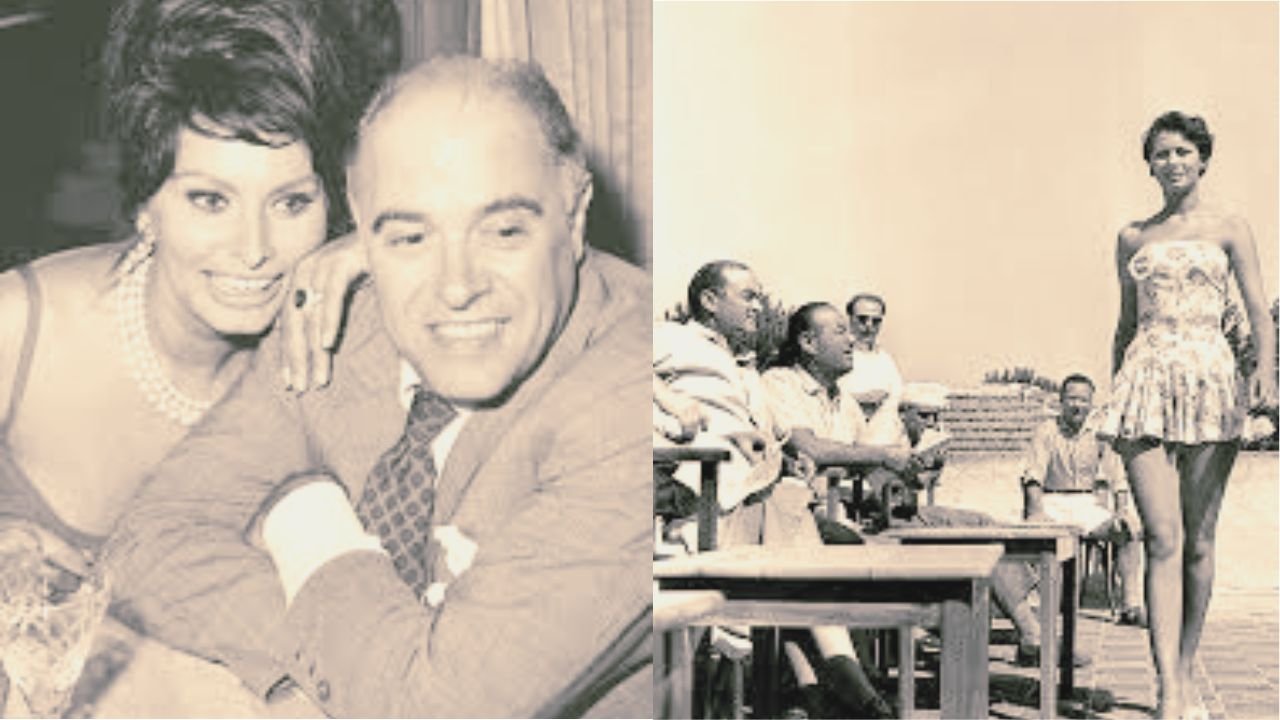
Most people who come across the name Giuliana Fiastri find it while reading about Sophia Loren. That makes sense. Fiastri’s connection to Carlo Ponti places her at the edge of one of Italian cinema’s most talked-about love stories. But she is more than a footnote in someone else’s biography. She is a distinct figure with a real place in Ponti’s family history — and her story deserves to be told clearly and honestly.
This article covers who Fiastri was, her 1946 marriage to Carlo Ponti, the two children they had together, the legal situation that developed when Ponti became involved with Sophia Loren, and how that situation was eventually resolved. Where public information is limited, this article says so directly.
Who Giuliana Fiastri Was?
Giuliana Fiastri is principally known as Carlo Ponti’s first wife. She was not a public entertainer or celebrity in her own right. Her name appears most often in family history records, celebrity biographies of Sophia Loren, and genealogy databases.
Reliable public information about her personal background, career, and private life is limited. That is worth stating clearly rather than papering over with guesses. She was a real person connected to one of Italy’s most prominent film producers, and that connection is the primary reason her name still circulates today.
It would be inaccurate to describe her as a public figure in the entertainment sense. The more honest framing is this: Fiastri is a historically significant figure in Ponti’s family story, not someone who sought or built an independent public legacy.
Her Marriage to Carlo Ponti
Fiastri and Carlo Ponti married in 1946. This was the postwar period in Italy, a time when Ponti was working to establish himself as a film producer. The marriage is documented in genealogical records and referenced in biographical accounts of Ponti’s life.
At that point, Ponti had not yet become the internationally recognized producer he would later be. His major professional association with Sophia Loren — both romantic and creative — came later. The 1946 marriage to Fiastri was the first chapter of his personal life, not the famous one.
Detailed records of the marriage ceremony or the circumstances surrounding it are not widely available in reliable public sources. What is documented is that the marriage happened and that it was legally recognized in Italy, a fact that would become significant in the years ahead.
Their Two Children — Guendalina and Alessandro Ponti
Fiastri and Ponti had two children together. Their daughter, Guendalina Ponti, was born in 1951. Their son, Alessandro Ponti, was born in 1953. Both birth years and names appear in genealogical records connected to Carlo Ponti’s family history.
Guendalina Ponti is described in biographical references as a lawyer and university lecturer. Her areas of focus reportedly include copyright, film law, intellectual property, and international law. That combination makes sense given her family background — a producer father and a career built around the legal frameworks that govern the creative industry.
Alessandro Ponti followed a path closer to his father’s profession. He is identified as a film producer, continuing the family’s connection to cinema into the next generation.
It is worth noting that these details come from genealogical reference material. They are presented here as biographical reference information rather than independently verified professional profiles. Still, they give a clear picture of a family with deep ties to both the law and the film world.
Sophia Loren later had two sons with Ponti — Carlo Ponti Jr. and Edoardo Ponti — creating a broader blended family history that links Fiastri’s children with Loren’s family in the public record.
Carlo Ponti, Sophia Loren, and the Legal Complication
Carlo Ponti and Sophia Loren met in the late 1940s when Loren was a young aspiring actress and Ponti was already working as a producer. Their personal relationship developed over time, but it ran directly into a significant legal obstacle: Ponti was still married to Fiastri, and Italy at the time did not recognize civil divorce.
This was not a minor procedural hurdle. It meant that any formal marriage Ponti attempted to enter in Italy would be legally invalid as long as his first marriage remained on the books. The Italian legal system offered no straightforward path to dissolving the Fiastri-Ponti marriage and contracting a new one within the country.
An early attempt to resolve the situation led to legal trouble. Ponti and Loren went through a proxy marriage ceremony in Mexico in 1957. Italian authorities did not accept this as valid, and both Ponti and Loren faced charges of bigamy in Italy as a result. The term “bigamy” appeared in contemporary accounts, though the full legal picture was more complicated than that single word suggests. Jurisdictional differences, the specific nature of the proceedings, and changing laws all played a role in how the situation was described and eventually handled.
That proxy marriage was later annulled, and the charges were eventually dropped. But the episode made clear that the couple could not simply navigate their way to a recognized marriage through informal legal arrangements. A more complete resolution was needed.
How the Situation Was Eventually Resolved?
The solution came through a change of nationality and a fresh set of legal proceedings. Ponti became a French citizen, which allowed him to pursue divorce under French law. Ponti and Fiastri’s marriage was dissolved through legal proceedings, and on April 9, 1966, Carlo Ponti and Sophia Loren married legally in France.
This 1966 marriage is the one that held. It was legally recognized and remained in place until Ponti’s death in 2007. The French proceedings effectively resolved what Italian law had made impossible for years.
It is worth being careful here about the exact terminology. Accounts of the Ponti-Fiastri dissolution use different language depending on the source — some say divorce, some say annulment, and some describe a combination of proceedings across different jurisdictions. The precise legal sequence is not universally agreed upon in secondary sources. What is clear is that the marriage to Fiastri was legally ended before the 1966 Loren marriage took place.
For readers researching this period of Italian legal and cultural history, a broader look at how Italy’s family law evolved in the postwar decades provides useful context. Resources on the topic can be found across academic and public interest platforms. New Business Desk covers related historical and cultural topics that intersect with legal and business history.
What Is Known About Fiastri After the Marriage Ended?
This is where the public record becomes genuinely thin. After her marriage to Ponti ended, Giuliana Fiastri largely disappeared from public coverage. She did not pursue a public career that generated news coverage, and her name does not appear in entertainment or media records the way Ponti’s and Loren’s do.
The honest answer to the question “What happened to Giuliana Fiastri after 1966?” is that reliable public information is scarce. She continued as the mother of Guendalina and Alessandro Ponti, both of whom went on to build careers of their own. Beyond that, filling in the picture would require speculation, and this article avoids that.
Some genealogy databases list approximate life dates for Fiastri, but those records are submitted by users and have not been verified through primary sources. They are not repeated here as established fact.
Why Fiastri’s Name Still Appears in Celebrity Searches?
There is a simple reason Giuliana Fiastri keeps coming up in searches about Sophia Loren. The legal obstacle that Fiastri’s marriage created was a significant part of Loren and Ponti’s story for years. Biographies of Loren, profiles of Ponti, and family history accounts all have to explain why the couple could not simply marry in Italy. That explanation always brings Fiastri’s name into the picture.
She is also the mother of two of Carlo Ponti’s children. Any account of Ponti’s full family tree includes Guendalina and Alessandro, which means Fiastri appears as their mother. In the interconnected way that celebrity family histories are told and retold, her name travels with those of the more prominent figures around her.
None of this makes Fiastri a celebrity in the conventional sense. It makes her an important figure in a complicated family and legal history that touched one of the most famous partnerships in European cinema.
A Final Note
Giuliana Fiastri’s place in history is specific and genuine. She was Carlo Ponti’s first wife. She was the mother of Guendalina and Alessandro Ponti. Her marriage to Ponti became the legal center of a years-long situation that prevented Ponti and Sophia Loren from marrying in Italy. That situation shaped significant parts of both Ponti’s and Loren’s public lives.
Beyond those confirmed facts, public information about Fiastri is limited. That limitation is not something to work around with assumptions or invented detail. It is simply where the documented record ends — and an honest account of her life acknowledges that openly.
Also Read: