

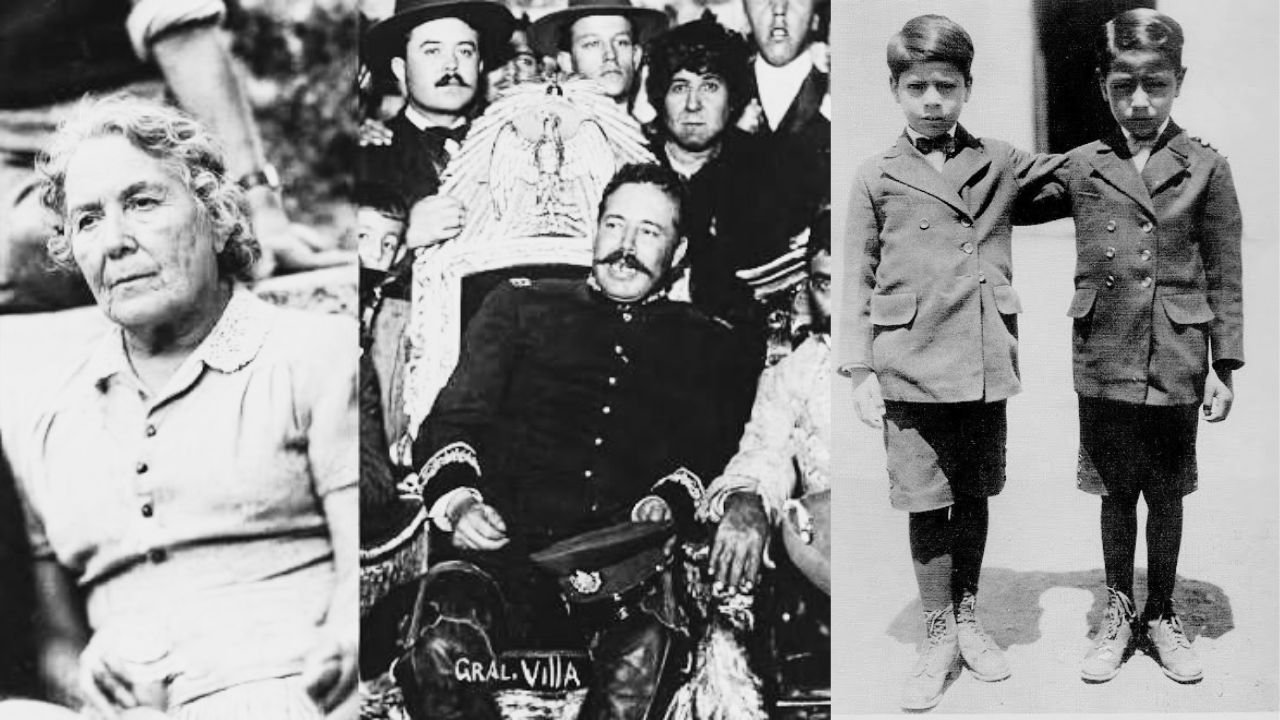
Most people who search for Octavio Villa Coss are not looking for a modern celebrity. They are following a family thread connected to one of Mexico’s most famous revolutionary figures — Pancho Villa. That connection is what makes Octavio worth knowing about, even if his own life story is only partially preserved in available records.
This article covers what is publicly known about Octavio Villa Coss — his reported parentage, his birth details, his career in customs oversight, his reported 1960 death, and what is known about his descendants. It also explains how to read the genealogy records that most people find when they search his name.
Who Was Octavio Villa Coss?
Octavio Villa Coss appears in genealogy records as a reported son of Pancho Villa — born Doroteo Arango Arámbula — and a woman named Guadalupe Coss. He is not a famous historical figure in his own right. Most of the public interest in him comes directly from that reported family connection.
His life is documented through a mix of family-tree submissions, academic studies of northern Mexico’s border history, and regional news reporting. There is no well-preserved official public record that has been widely cited or reproduced. That matters when reading any claims about him.
Sites like Geni and Find a Grave list him with parentage attributed to both Pancho Villa and Guadalupe Coss. These are contributor-submitted records. They are useful as research starting points, but they carry less evidentiary weight than civil registry documents, church records, or military files.
His Reported Parents — Pancho Villa and Guadalupe Coss
Pancho Villa needs little introduction to anyone interested in Mexican history. He was a central military commander during the Mexican Revolution, leader of the División del Norte, and served as temporary governor of Chihuahua. His fame is why any reported descendant attracts genealogical attention.
Guadalupe Coss is described in genealogy material as having entered a relationship with Villa at the Rancho de Santiago in Guerrero, Chihuahua. The nature of that relationship — whether it was a formal marriage or something less documented — is not confirmed by a widely available primary record. The connection is commonly described as reported rather than legally established.
It is also worth noting that Pancho Villa had multiple relationships and a number of children across different family lines. Octavio Villa Coss should not be confused with other Villa descendants. The Villa family tree is large, and the genealogy records do not always make clear distinctions between branches.
Birth Date and Early Details — What the Records Actually Say
This is where readers will quickly notice a problem. The available sources do not agree on when Octavio was born.
The Geni record gives his birth date as May 16, 1914, at Rancho de Santiago in Guerrero, Chihuahua, Mexico. That is a specific and plausible detail, given the location’s connection to his reported mother and father.
However, a later regional news report about his daughter Rosa Helia Villa de Mebius gives October 13, 1914 as his birth date. That is a direct conflict with the first record, and neither source is a primary civil registry document.
The honest answer is that both dates should be treated as reported rather than confirmed. User-submitted family trees work like research leads — they can point toward the right relationships and approximate dates, but they need corroboration from stronger primary sources to be treated as settled facts.
Researchers looking to resolve this conflict would need to check civil registry records from Chihuahua, church baptismal records from the Guerrero area, or military enrollment documents from his later career.
His Career as a Military Officer and Customs Official
Historical and academic sources identify Octavio Villa Coss as a lieutenant colonel. He held a role connected to customs supervision in northern Mexico, specifically in the Reynosa area of Tamaulipas.
His position placed him at the border between military service and law enforcement during a period when smuggling along the U.S.–Mexico border was a serious and growing problem. Customs oversight in that region during the mid-twentieth century was both politically significant and physically dangerous work.
The specific agency he served under or the full scope of his daily duties is not detailed in the sources available. What is clear is that his role gave him authority over border trade and contraband control — and that this role would ultimately lead to the circumstances of his reported death.
His Reported 1960 Death and the Juan N. Guerra Connection
The most historically notable event associated with Octavio Villa Coss is his reported killing in April 1960. Available sources place the incident in the Matamoros or northern Tamaulipas region.
Academic sources and regional reporting connect the killing to Juan Nepomuceno Guerra, a powerful smuggler who later became associated with the early history of what would grow into the Gulf Cartel. Guerra was one of the most significant organized crime figures in that region during that era.
The details of the killing, however, are disputed. Accounts differ over what contraband was involved — some sources mention coffee smuggling, while others point to different goods. Academic discussion also notes that Guerra’s driver reportedly accepted responsibility for the shooting, while other evidence and local reporting pointed more directly at Guerra himself.
The case does not appear to have reached a clear, publicly documented legal resolution. It should not be presented as a settled conviction. What is consistent across sources is that the killing was connected to a confrontation involving smuggling operations and that it placed Octavio’s death squarely in the context of organized crime along the northern border.
For readers researching the Gulf Cartel’s origins or the history of smuggling in Tamaulipas, Octavio Villa Coss represents an early and rarely discussed case of institutional conflict between border enforcement and organized contraband networks.
His Descendants — Rosa Helia Villa de Mebius
One of the more useful pieces of information for placing Octavio within a larger family story comes from a regional news report on Rosa Helia Villa de Mebius, identified as his daughter.
Rosa Helia is described as someone who worked to preserve and explain the family’s historical legacy — particularly the story of Pancho Villa and his descendants. Her work represents one of the ways that Octavio’s branch of the Villa family stayed connected to the broader public memory of the Mexican Revolution.
The same report gives Octavio’s birth date as October 13, 1914 — the conflicting date mentioned earlier. Researchers should keep that inconsistency in mind when using this source.
Rosa Helia’s existence as a documented public figure does at least provide an additional anchor for Octavio’s biography. Her identification as his daughter is stated in regional reporting, which gives that family connection slightly more context than an uncorroborated genealogy entry alone.
How to Read the Genealogy Records Available Online?
If you found Octavio Villa Coss through a family-tree search on Geni, Find a Grave, or a similar platform, it helps to understand what those records actually represent.
These sites collect submissions from individual users — sometimes researchers, sometimes family members, sometimes people compiling information from secondary sources. The records can be accurate and genuinely useful. But they can also carry forward errors, conflicting dates, or unverified parentage claims without flagging the uncertainty.
For Octavio Villa Coss specifically, the key claims that need primary-source corroboration include:
- His parentage as a son of Pancho Villa and Guadalupe Coss
- His birth date (currently listed as either May 16 or October 13, 1914)
- His exact military rank and agency role
- The specific circumstances and legal outcome of his reported 1960 death
Academic sources from Mexican border history research and regional archives in Chihuahua and Tamaulipas would be the strongest places to look for corroboration. For those researching the Villa family more broadly, resources like NewBusinessDesk and similar research-focused platforms can also help identify current writing on historical genealogy topics.
Why Octavio Villa Coss Still Gets Searched?
It is fair to ask why someone with a limited public record continues to attract searches. The answer comes down to three overlapping interests.
First, Pancho Villa remains one of the most searched figures in Mexican revolutionary history. Any reported relative or descendant draws attention by association. Second, genealogy research has expanded significantly, and more people are actively tracing family lines connected to historical figures. Third, the 1960 killing connects Octavio to the early history of organized crime along the U.S.–Mexico border — a topic that remains relevant in academic and journalistic research today.
He is not a celebrity in any conventional sense. Calling him a historical figure or a genealogical subject is more accurate. But the combination of a famous reported father, a notable career, and a violent death in a politically sensitive context gives him a place in the historical record that goes beyond a simple family-tree entry.
Conclusion
Octavio Villa Coss is a figure whose importance is almost entirely shaped by who he was reportedly connected to — Pancho Villa — and by what happened to him in 1960. His own life and career are only partially documented, and the records that do exist sometimes contradict each other.
What can be said with reasonable confidence is this: he was reported to be a son of Pancho Villa and Guadalupe Coss, born in Chihuahua sometime in 1914; he served as a lieutenant colonel with a customs-oversight role in Tamaulipas; and he was reportedly killed in April 1960 in circumstances connected to smuggling and organized crime. His daughter Rosa Helia Villa de Mebius later worked to keep the family’s historical legacy alive.
Also Read: