

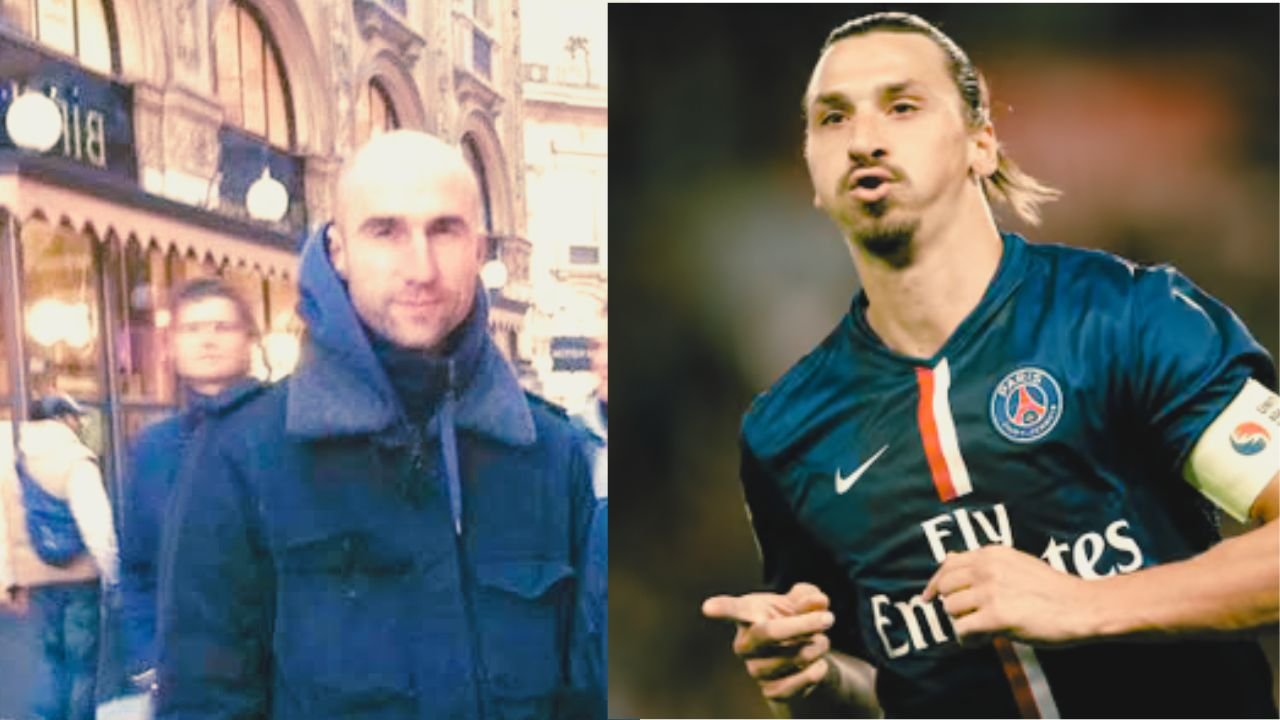
Zlatan Ibrahimović is one of the most covered footballers in modern history. His career, his personality, and his family background have all been written about extensively. Yet some of his relatives remain almost invisible online — and Sapko Ibrahimović is a clear example of that.
If you’ve come across the name while searching Zlatan’s family tree, you’re not alone. This article covers what public records actually say about Sapko Ibrahimović, how he’s connected to Zlatan, and why reliable details are so hard to find.
Who Sapko Ibrahimović Is, According to Available Records?
The clearest piece of public information about Sapko Ibrahimović comes from MyHeritage, a genealogy platform that lists him as a Swedish male born on April 30, 1973. The same record identifies him as a brother of footballer Zlatan Ibrahimović.
Beyond that, there is very little to go on. Sapko does not appear to have had a public career in sports, entertainment, or any other field. He hasn’t been the subject of interviews, news articles, or official biographies. Most references to him show up in genealogy databases and secondary celebrity biography pages, not in journalism or verified public records.
It’s worth being upfront about that limitation. A MyHeritage entry is a genealogy record, not an official civil registry. It supports the existence of a family connection, but it doesn’t carry the same weight as a birth certificate or a verified government document.
Brother or Half-Brother — What Sources Actually Say
This is where available sources start to disagree with each other. MyHeritage uses the broader term “brother” when describing Sapko’s relationship to Zlatan. IMDb’s biography section for Zlatan, however, describes Sapko as a half-sibling, not a full brother.
Neither of these sources is equivalent to a birth registry. So rather than picking one version and presenting it as settled fact, it’s more accurate to say that Sapko is reported to be a half-brother of Zlatan Ibrahimović, based on available public records.
The inconsistency across sources isn’t surprising when you consider the family structure. Zlatan grew up in a blended household, with both full and half-siblings. When different databases pull from different parts of a blended family tree, you often end up with conflicting labels. That appears to be what’s happening here.
Zlatan Ibrahimović’s Family Background and Blended Household
To understand where Sapko fits, it helps to know the basics of Zlatan’s family background — which is much better documented.
Zlatan Ibrahimović was born on October 3, 1981, in Malmö, Sweden. His father, Šefik Ibrahimović, is a Bosniak Muslim who immigrated to Sweden from Bosnia and Herzegovina. His mother, Jurka Gravić, is a Croat who came from Croatia. The two met in Sweden after immigrating from the former Yugoslavia, and they later divorced when Zlatan was still young.
After the divorce, Zlatan split his time between his parents’ separate households. That kind of divided upbringing, combined with parents from different backgrounds, naturally creates a more complex sibling structure than a traditional nuclear family.
Published sources commonly mention Zlatan’s sister Sanela alongside Sapko when listing his siblings. But the exact number of siblings varies depending on which source you read, and no single public record pins down a confirmed total. It’s safer to describe Zlatan as having multiple siblings — some full, some half — without stating a specific number as fact.
Growing Up in Rosengård — The World Zlatan and His Siblings Knew
Zlatan’s childhood is closely associated with Rosengård, a district in Malmö known for its cultural and ethnic diversity. It’s the neighborhood most often referenced in accounts of his early life and his path into football.
Rosengård was home to many families who had immigrated to Sweden from the former Yugoslavia and other parts of Europe. The Ibrahimović family was part of that broader migration story — Bosnian and Croatian roots transplanted into a Swedish working-class neighborhood.
Sapko, born in 1973, would have been roughly eight years older than Zlatan. That’s a significant age gap. Whether they grew up in the same household, or even the same neighborhood, is not documented in any publicly available source. So while Rosengård is an important part of Zlatan’s story, it would be a stretch to assume it was equally central to Sapko’s experience.
The Reported Death in 2014 — What Is and Is Not Confirmed
Some secondary biography websites report that Sapko Ibrahimović died on April 10, 2014, at the age of 40, following a long illness. This detail appears on sites like BodyHeightWeight, which covers celebrity family backgrounds.
However, this claim has not been confirmed by an obituary, a news report from a reputable publication, or any official public registry. It’s a detail that circulates on lower-authority biography pages, and while it may be accurate, it cannot be treated as established fact based on those sources alone.
If you’re researching this for personal or genealogical reasons, it’s worth looking for primary documentation — a local Swedish death registry, a family announcement, or a credible news reference — before accepting that detail as confirmed.
Why So Little Information Exists?
It’s natural to wonder why someone connected to one of the world’s most famous footballers would have almost no public footprint. The answer is fairly straightforward.
Sapko Ibrahimović does not appear to have pursued a public career. He wasn’t a professional footballer, a media personality, or a public figure in any documented sense. Family members of celebrities often live private lives, and the absence of a public profile is completely normal — it just becomes noticeable when people go looking.
The internet has also created an odd dynamic where genealogy databases and auto-generated biography pages pick up names from family trees and present them as profiles. That’s largely what has happened with Sapko. His name appears because of his family connection, not because he sought public attention.
For readers interested in celebrity family histories, Newbusinessdesk covers a range of profiles that separate confirmed facts from unverified claims — which matters a lot when sources are thin.
Common Questions, Briefly Answered
Was Sapko a footballer?
There is no reliable evidence that Sapko Ibrahimović played professional football or had any documented role in sports. His connection to Zlatan is a family one, not a professional one.
How many siblings does Zlatan have?
Published sources list multiple siblings, including at least one full sibling and several half-siblings, but the exact number varies across biographies and has not been confirmed in a single authoritative source.
Is Sapko the same person as other relatives named Ibrahimović?
Based on available records, Sapko Ibrahimović appears to be a distinct individual — not to be confused with Zlatan’s father Šefik or other relatives who share the family name.
Keeping It in Perspective
Sapko Ibrahimović is a name that surfaces when people research Zlatan’s family background. Public records, primarily from genealogy sources, identify him as a brother or half-brother of Zlatan, born on April 30, 1973. Beyond that, confirmed details are scarce.
He doesn’t appear to have lived a public life, and most of what circulates about him online comes from genealogy databases and secondary websites rather than verified journalism. Some sources report a death in 2014, but that claim has not been independently confirmed in any primary record available to the public.
What can be said with confidence is that Zlatan Ibrahimović comes from a blended family with immigrant roots, a divided childhood, and a mix of full and half-siblings. Sapko is part of that family picture — but the full details of his life remain largely private, as they appear to have always been.
Also Read: